01
Scarcity you can verify
A capped run is the clearest signal. If a figure is made in a numbered edition and the run closes, the number on the base is a fact about how many exist — not a marketing line.
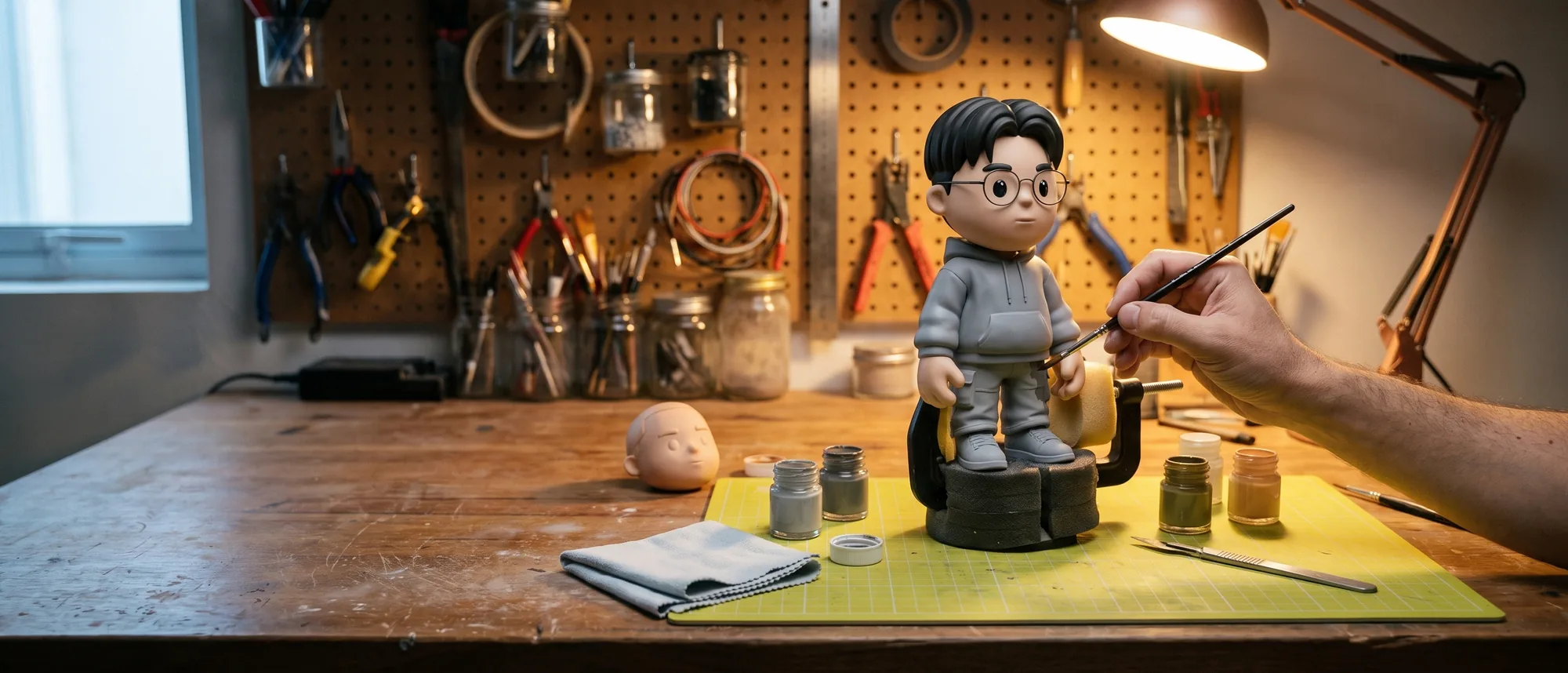
A made-to-order figure of a specific person is scarce in a different way: there is exactly one, and no second buyer can order the same design by accident.
02
Finish that rewards close attention
Mass-produced figures are finished to a price. Hand-painted pieces carry small variations, and the variation is the point — it means a person finished that specific object.
Weighted bases, soft-touch matte finishes and metal accents are all things you only notice when you pick a figure up, which is exactly when a collector decides how they feel about it.
03
Packaging is part of the object
Collectors keep boxes. A matte collector's box with a numbered card is part of what's being collected, not disposable wrapping, and it's a large part of why an unboxing feels like an event.
04
A story worth repeating
The most collectible pieces carry something to say about them: who it's of, why it was made, what run it came from. A figure of a licensed character borrows someone else's story. A figure of you, or of someone you know, arrives with its own.
That's the part that can't be manufactured at scale, and it's the reason a one-of-one design holds its meaning longer than a mass-market release.
05
Common questions
Are limited editions actually limited?
Yes. Limited runs are capped and individually numbered on the base plate. When a run sells through, it doesn't come back.
Is a MEYO figure a toy?
No, it's a display piece, made to sit on a shelf rather than to be played with.
How is it packed?
In a matte collector's box with a numbered card, inside a plain outer carton. Nothing on the outside shows what's inside.