01
The part that stays yours
You bring the likeness and the audience. That means your face, your style and the version of you your community already recognises — which is usually a much more specific thing than you think it is.
Everything downstream of that is not your problem: the 3D design session, hand-finishing, packing, worldwide shipping, payments and support.
02
Nothing is made before it is bought
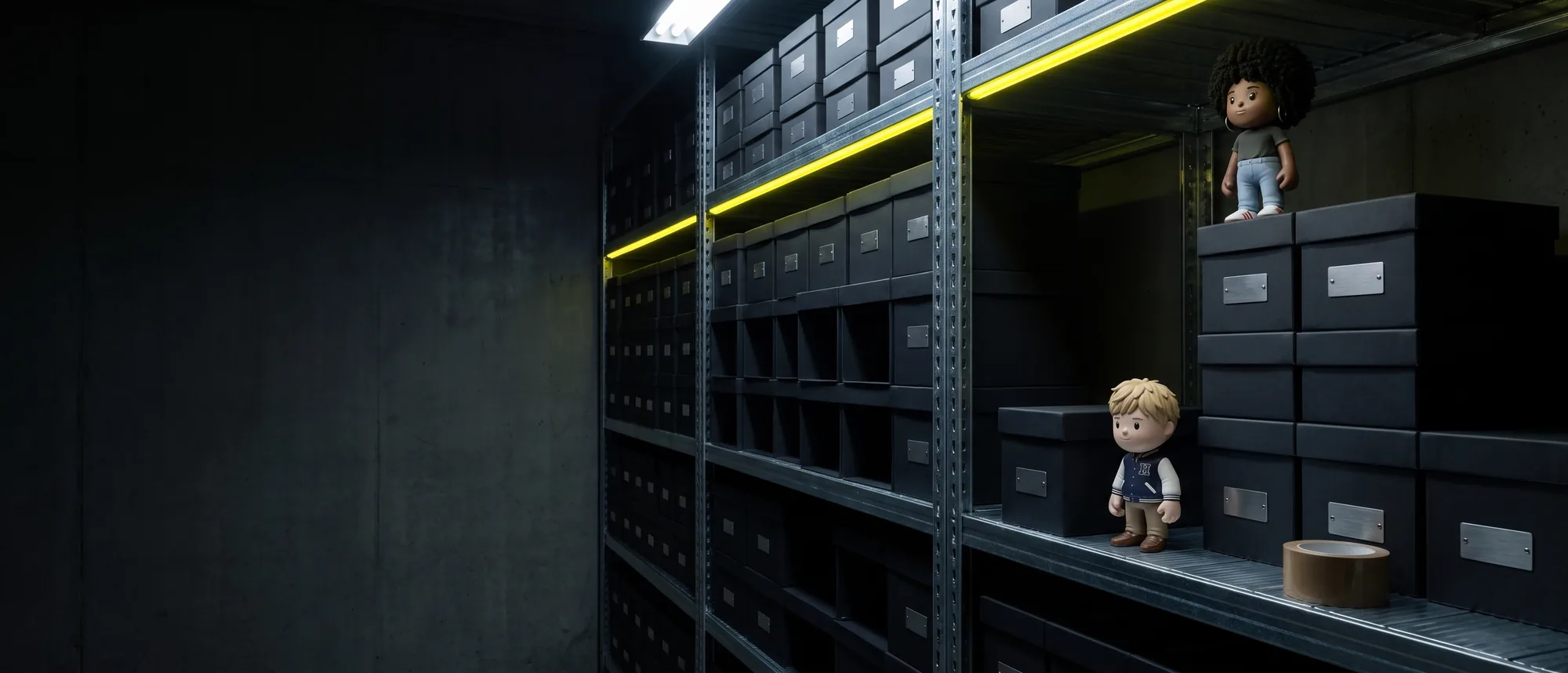
Every figure is made to order, so there is no warehouse and no minimum order. Nothing sits in a box with your face on it waiting to be written off.
That is what makes a small drop viable. A run does not have to clear an inventory bill before it is worth doing, so you can cap it at a number your audience can actually absorb.
03
Cap it, then let it close
A drop lands on your own page, with the edition, the sell-through and the add-to-cart in one place. The cap is set before it opens and does not move.
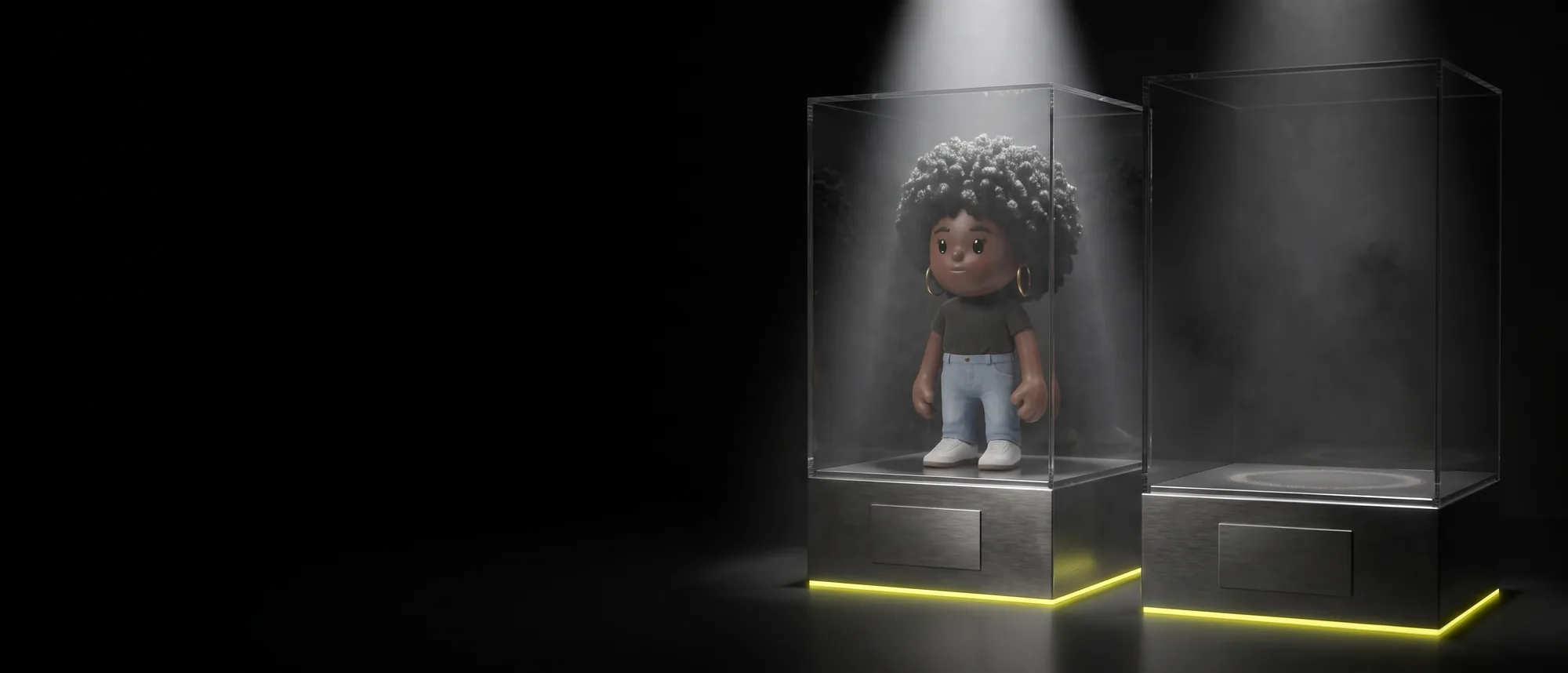
Letting a run actually close is the part people get wrong. An edition that quietly restocks teaches your audience to wait; one that retires teaches them to show up.
04
The whole thing is filmable
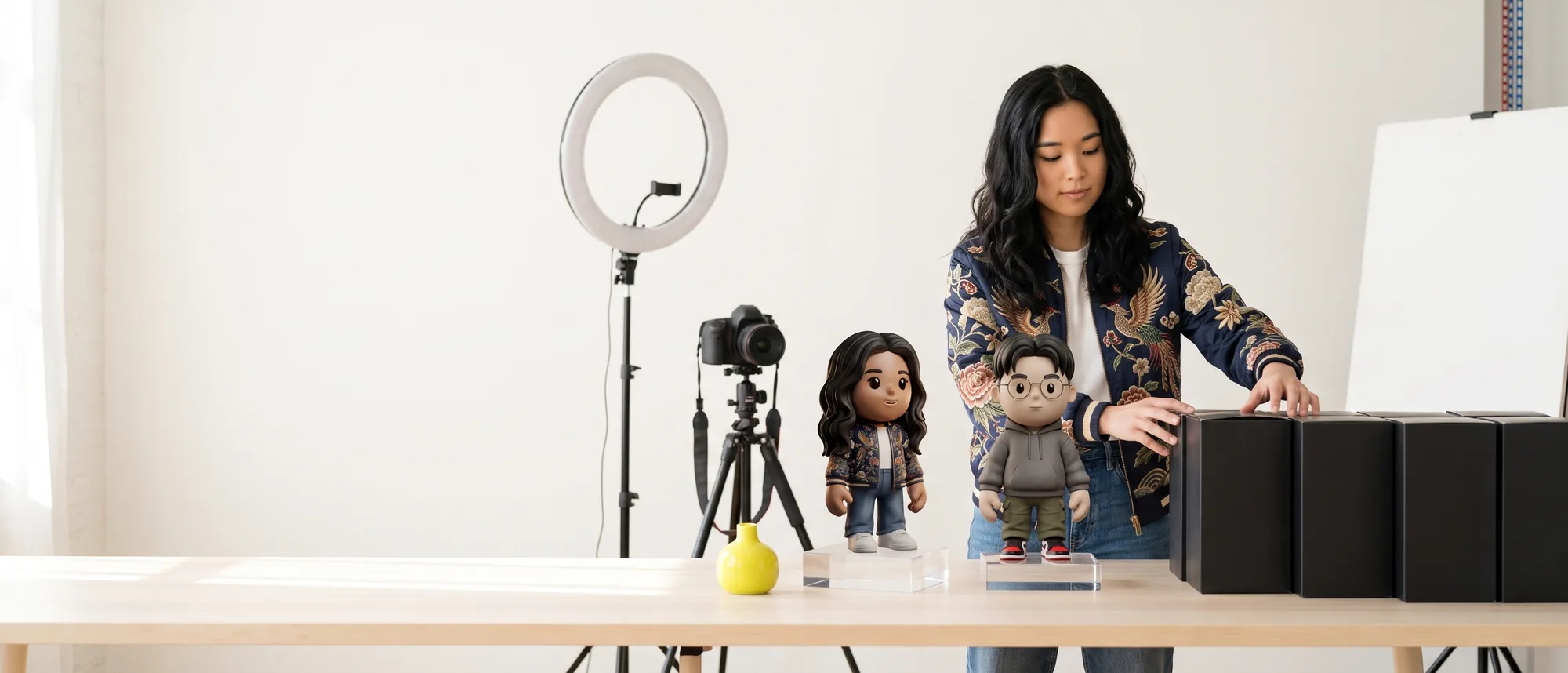
The design session, the first test piece arriving, the unboxing — that is three pieces of content before anything is for sale, and all of it is about you rather than about a product.
This is the part that makes a figure drop different from a t-shirt: watching a version of someone get built is interesting on its own.
05
Common questions
Is there a minimum order?
No. Every figure is made to order, so nothing is manufactured before it is bought.
How do partnerships work?
They are application-only, and every submission is reviewed personally.
Where does the drop live?
On its own storefront page, with the edition, sell-through and add to cart together.